


How can a bone conduction Bluetooth headset reduce the pressure caused by prolonged wear through structural design?
Release Time : 2026-02-25
The bone conduction Bluetooth headset offers a systematic solution to reduce pressure during prolonged wear through its unique structural design. Its core logic revolves around three dimensions: pressure distribution, dynamic adaptation, and material optimization, ensuring both efficient sound transmission and ergonomic comfort.
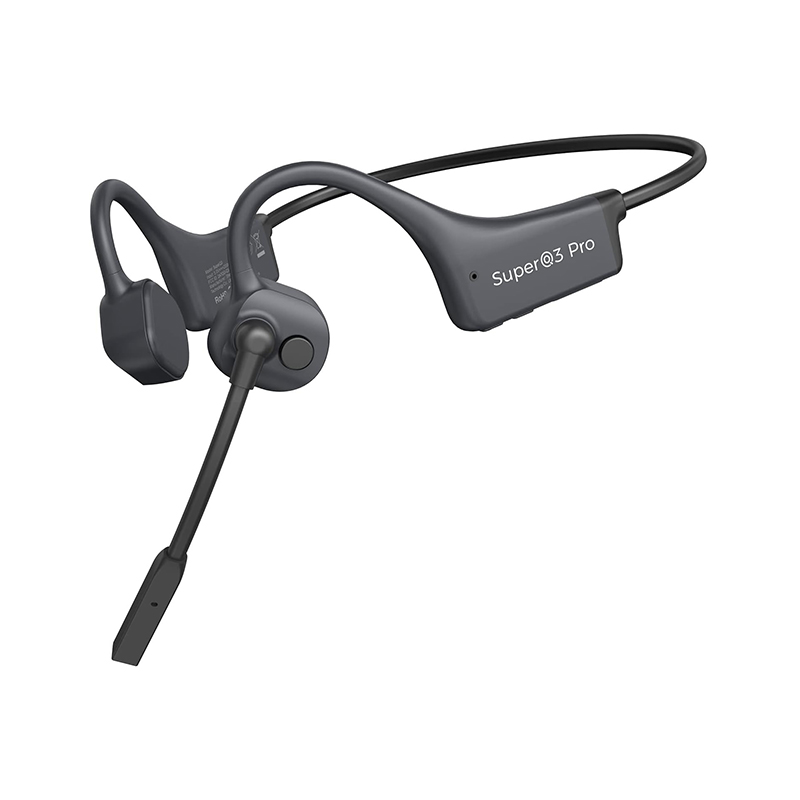
Traditional headphones often rely on localized support within the ear canal or outer ear. The bone conduction Bluetooth headset, however, distributes pressure across a wider area of the head through a combination of multi-point contact and an elastic structure. For example, the mainstream ear-hook design uses an arc-shaped ear hook with an ergonomically simulated curvature that conforms to the contours of most ears, converting the vertical pressure of the vibrating unit into a horizontal, supportive force, preventing continuous pressure on the temples or cheekbones from a single point. The headband design distributes pressure evenly across the top of the head through an elastic headband. With adjustable buckles, users can fine-tune the pressure according to their head size. This design is particularly common in military and industrial settings, ensuring the headset remains stable during vigorous activity while reducing localized pressure.
The "floating fixation structure" of the vibrating unit is a key technology for reducing pressure. This structure isolates the vibration unit from the main body of the device using silicone pads, forming a buffer layer similar to a shock-absorbing spring. When the vibration unit is working, the silicone pads can both transmit mechanical vibrations and absorb some of the reverse force, preventing the vibrations from being directly transmitted to the outer shell of the device, thus reducing the impact on the skull. In addition, some high-end models adopt a "conical vibration head" design, with a slightly convex curved contact surface, resulting in a larger contact area with the skull and a more even pressure distribution, reducing local pressure by approximately 30% compared to a flat vibration head.
The choice of materials directly affects wearing comfort. Parts in contact with the skin are generally made of food-grade silicone, a material that is skin-friendly, non-slip, and breathable, making it less likely to cause allergies or stuffiness even after prolonged wear. The frame of the device is mostly made of titanium alloy or high-strength nylon. The former combines lightweight and high elasticity, while the latter uses a special process to achieve a shape-memory molding function, automatically adjusting the curvature according to the user's head shape. For example, the NANK Runner Pro series uses an aerospace-grade titanium alloy backband that can recover its original shape after 10,000 bending tests, ensuring a stable wearing experience for users with different head sizes.
Adjustable design further enhances fit. Some models feature a 360° rotating vibration unit, allowing users to fine-tune the angle according to their skull curvature, ensuring a perfect fit between the vibration unit and the mastoid process. This design is particularly suitable for users with significant differences in skull shape, such as those with flat heads or high cheekbones. Furthermore, the split-type bone conduction Bluetooth headset abandons the traditional backband structure, using two independent vibration units directly clipped to the front of the ear, secured with magnets or clips, completely eliminating pressure on the back of the head, making it suitable for use while sleeping or lying on your side.
Dynamic pressure adjustment technology achieves intelligent fit through built-in sensors. The pressure-sensing adjustment function monitors the contact pressure between the vibration unit and the skull in real time. When the pressure exceeds a threshold, it automatically reduces the vibration amplitude to prevent loosening of contact or excessive pressure due to movement. For example, during running, the headphones dynamically adjust their output power based on stride frequency and head movement, ensuring sound clarity while maintaining a comfortable pressure level. This technology is particularly suitable for long-duration exercise, such as marathons or cycling, effectively reducing auditory fatigue caused by fluctuations in vibration intensity.
Lightweight design is a fundamental prerequisite for reducing pressure. Mainstream bone conduction Bluetooth headsets weigh between 30-50 grams, equivalent to the weight of an egg. By optimizing internal circuit layout, using miniaturized vibration units, and simplifying structural components, designers minimize the weight of the device while maintaining functional integrity. For example, the Shokz OpenRun Pro uses an integrated chip design to reduce the motherboard area by 20%, freeing up more space for the battery and vibration unit, achieving a balance between weight and battery life.
Comfort during long-term wear is also reflected in the details of the design. Some models have a nano-level hydrophobic coating on the surface of the vibration unit, which prevents sweat buildup and slippage, and reduces skin discomfort caused by friction. The memory foam strips embedded inside the ear hooks gradually soften with wear time, forming a customized shape that perfectly conforms to the ear, further distributing pressure. Furthermore, the detachable design allows users to clean the headphones regularly, preventing hygiene issues caused by dirt buildup and extending the comfortable wearing period. These details collectively contribute to the "unobtrusive" user experience of the bone conduction Bluetooth headset, making it an ideal audio device for scenarios such as sports, office work, and commuting.