


How can call clarity be guaranteed in noisy environments with a Bluetooth business headset?
Release Time : 2025-11-19
Ensuring clear calls with Bluetooth business headsets in noisy environments requires comprehensive improvements across multiple dimensions, including hardware noise cancellation technology, microphone configuration, audio encoding optimization, wearing design, environmental adaptability, software algorithms, and user habits. Active noise cancellation is the core support. Mainstream Bluetooth business headsets use built-in high-sensitivity microphones to capture ambient noise and generate inverse sound waves to cancel it out, effectively reducing low-frequency noise such as traffic rumble and air conditioner noise. Some high-end models employ hybrid noise cancellation solutions, combining active and passive noise cancellation (such as physical sound isolation from earplugs) to further enhance the suppression of mid-to-high-frequency noise, ensuring the purity of voice transmission.
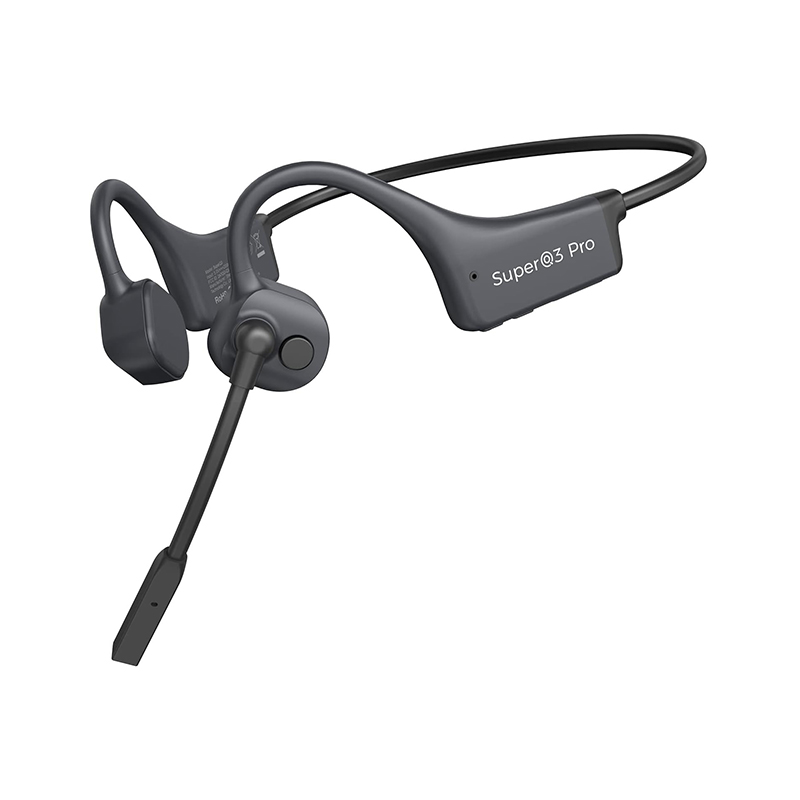
Microphone configuration directly affects sound pickup quality. Multi-microphone array designs have become the mainstream trend, using beamforming technology to accurately locate the direction of the voice while suppressing background noise. For example, a dual-microphone system typically places one microphone close to the mouth to capture speech, while the other is placed outside the headset to monitor ambient noise, using algorithms to filter interference. A four-microphone solution further expands the pickup range and improves noise cancellation accuracy in complex environments. Some headsets also feature wind noise suppression, reducing airflow interference during outdoor calls through structural optimization or software algorithms.
The choice of audio encoding technology is crucial for call clarity. Bluetooth business headsets that support high-definition encoding protocols (such as aptX, AAC, and LC3) can transmit higher bitrate audio data with lower latency, reducing sound distortion and stuttering. For example, aptX Adaptive encoding dynamically adjusts bandwidth according to the environment, reducing power consumption while maintaining sound quality; LC3, as the core encoding of the Bluetooth 5.2 standard, provides higher sound quality at the same bandwidth, especially suitable for voice transmission in noisy environments.
The rationality of the wearing design directly affects noise cancellation and voice pickup. In-ear headphones achieve physical noise isolation by sealing the ear canal, requiring various sizes of ear tips to fit different ear shapes and ensure a proper fit; semi-in-ear headphones balance comfort and noise isolation through structural optimization, avoiding the stuffiness caused by completely blocking the ear canal. Over-ear headphones, with their larger drivers and more enclosed earcups, generally have advantages in noise cancellation depth and sound quality, making them suitable for extended wear. Furthermore, the weight distribution and material selection (such as skin-friendly silicone or lightweight metal) of the earphones also affect wearing stability, preventing microphone position shift due to shaking.
Environmental adaptability is a crucial consideration for Bluetooth business headsets. Some models optimize noise cancellation algorithms for specific scenarios. For example, wind noise reduction design reduces airflow noise during outdoor calls by adding a windscreen or optimizing microphone hole positioning; transparency mode allows users to adjust ambient sound intensity as needed, eliminating the need to remove the earphones when needing to perceive surrounding sounds (such as crossing the street or conversing with colleagues). Additionally, the earphone's waterproof and dustproof rating (such as IPX4 or IPX5) determines its reliability in dusty or humid environments, preventing performance degradation due to sweat or rain.
Continuous optimization of software algorithms is key to improving call clarity. Manufacturers iterate noise cancellation algorithms through firmware updates, such as introducing deep learning models to analyze noise characteristics and achieve more accurate dynamic noise cancellation; some earphones support custom equalizers, allowing users to adjust mid-to-high frequency gain according to their individual hearing habits, enhancing vocal clarity. Furthermore, the integration of technologies such as voice accelerometers and bone conduction sensors can assist in voice pickup by detecting head movements or jaw vibrations, further improving call stability in noisy environments.
User habits also affect call quality. Before wearing the headphones, ensure they fit snugly in the ear canal to avoid sound leakage or noise intrusion due to looseness; during calls, keep the microphone close to your mouth (about 2-3 cm) to avoid muffled sound due to excessive distance; regularly clean the microphone hole and speaker grille to prevent dust blockage affecting sound quality. If the ambient noise is too high, try switching to single-ear mode or using the accompanying app to enable the "enhanced voice" function, which uses algorithms to highlight speech segments and improve call intelligibility.