


How does the microphone array design of a Bluetooth business headset improve sound pickup?
Release Time : 2025-12-03
Microphone array design is a core technology for improving sound pickup in Bluetooth business headsets. Through multi-microphone collaboration and intelligent algorithm optimization, it achieves precise sound pickup, enhanced noise reduction, and scene adaptation in complex environments, providing crucial support for clear calls in business settings.
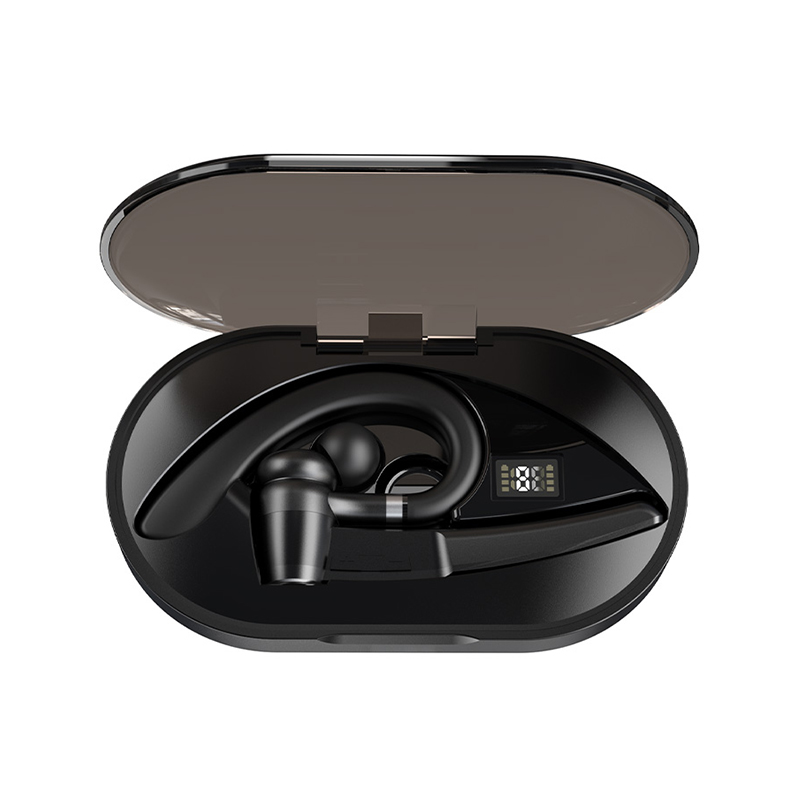
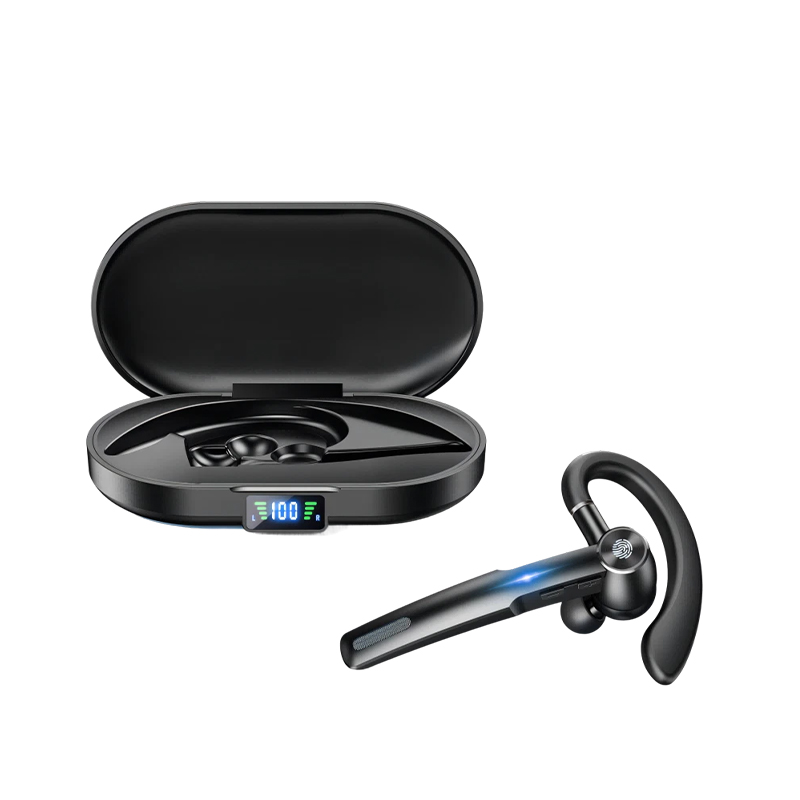
Traditional single-microphone Bluetooth business headsets are limited by physical location, making their sound pickup performance susceptible to environmental interference. For example, in-ear headset microphones are typically located at the bottom of the earpiece stem, far from the mouth, resulting in significant energy attenuation and loss of high-frequency components during sound wave transmission. While over-ear headsets have microphones closer to the mouth, they still struggle to completely isolate background noise in noisy environments.
Microphone array design, through multi-microphone spatial layout and beamforming technology, overcomes the physical limitations of a single microphone, forming a directional sound wave receiving area that can accurately capture target sound sources and suppress side noise. For example, Bluetooth business headsets with a vertical stem design have their microphone array located at the bottom of the stem, shortening the distance to the mouth and significantly improving voice clarity. Meanwhile, circular microphone arrays, by arranging microphones at multiple angles, ensure stable sound pickup even when the headset is horizontal or rotated, adapting to diverse scenarios such as movement and side-lying calls.
Beamforming technology is the core algorithm of microphone arrays. It uses the main microphone to capture the user's voice and the secondary microphone to monitor ambient noise, generating reverse sound waves to cancel out interference, achieving "directional sound pickup." For example, high-end Bluetooth business headsets use dual-microphone or triple-microphone arrays, combined with beamforming technology, to significantly improve voice clarity in high-noise environments such as subways and shopping malls.
Some products also incorporate bone conduction voiceprint recognition technology, using vibration sensors to capture the user's throat vibrations to assist in voice enhancement, maintaining speech coherence even in strong winds. Furthermore, the addition of AI noise reduction algorithms further improves sound pickup. Based on deep learning models, AI algorithms can distinguish between human voice and noise, dynamically adjusting noise reduction strategies in complex environments. For example, in scenarios like coffee shops, AI algorithms can suppress background noise while preserving voice details, ensuring clear calls.
For different business scenarios, microphone array designs optimize sound pickup through scenario-based strategies. In multi-person conferences, sound source localization and autofocus technology calculate the speaker's location and dynamically adjust the pickup focus to the current speaker, while suppressing echo interference. In in-vehicle scenarios, Bluetooth business headsets automatically switch to headset calls when a call comes in via in-vehicle Bluetooth linkage, and activate enhanced noise cancellation when the vehicle speed exceeds a threshold, ensuring clear calls. In sports scenarios, the combination of windscreen design and bone conduction technology effectively filters wind noise and friction noise, maintaining stable calls.
The synergy between hardware design and algorithm optimization is key to the efficient sound pickup of microphone arrays. At the hardware level, microphone type, sensitivity, and signal-to-noise ratio directly affect sound pickup quality. High-sensitivity microphones can capture subtle sounds, but require noise reduction algorithms to suppress ambient noise; low signal-to-noise ratio microphones are easily interfered with, leading to voice distortion. At the algorithm level, the integration of technologies such as beamforming, AI noise reduction, and spatial filtering can significantly improve speech separation and enhancement. For example, through multi-microphone collaboration, the system can quickly identify noise sources and generate inverse sound waves, achieving efficient noise reduction. Simultaneously, AI algorithms can dynamically adjust parameters based on speech characteristics to adapt to different scenario requirements.
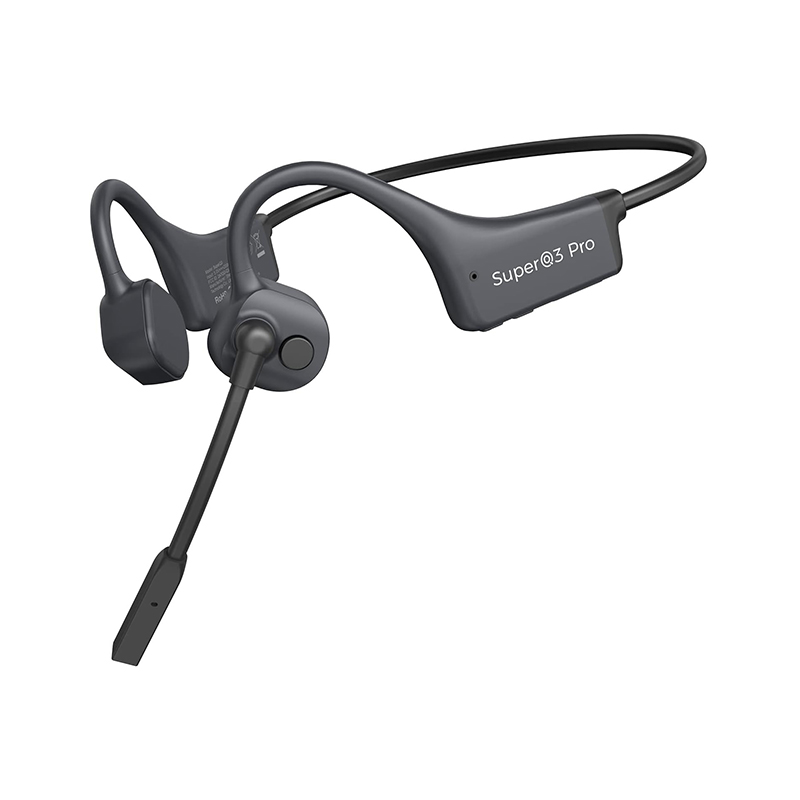
User operating habits also significantly impact the sound pickup performance of microphone arrays. Optimizing the wearing position is fundamental to improving sound pickup. In-ear headphones require ensuring the microphone hole faces the corner of the mouth, with the tilt angle not exceeding a threshold; over-ear headphones require the microphone boom to extend a fixed distance in front of the mouth to maintain stable sound pressure levels. Environmental management strategies are equally important. In high-noise environments, enabling the highest level of noise reduction and shortening call duration can reduce noise interference; in quiet environments, turning off noise reduction to save power results in a more natural sound. Furthermore, regularly cleaning microphone hole dust and updating firmware to optimize algorithms are also crucial for maintaining sound pickup performance.
From a technological evolution perspective, Bluetooth business headset microphone arrays are developing towards "active sensing" and "intelligence." Ultrasonic directional microphone technology uses ultrasonic beams to precisely control the pickup range within a fixed area around the mouth, significantly reducing ambient noise. AI algorithms enable automatic scene switching, dynamically adjusting microphone parameters based on the user's environment for seamless optimization. In the future, with further technological integration, Bluetooth business headsets will possess enhanced environmental adaptability and voice processing capabilities, providing more comprehensive solutions for efficient communication in business scenarios.